إعادة لفّ الشريط
نجد الإلهام والألحان الجميلة في أرض نسيها الزمن.
التدوينة
Before we begin our story about this magical land we discovered, we have to start with another one.
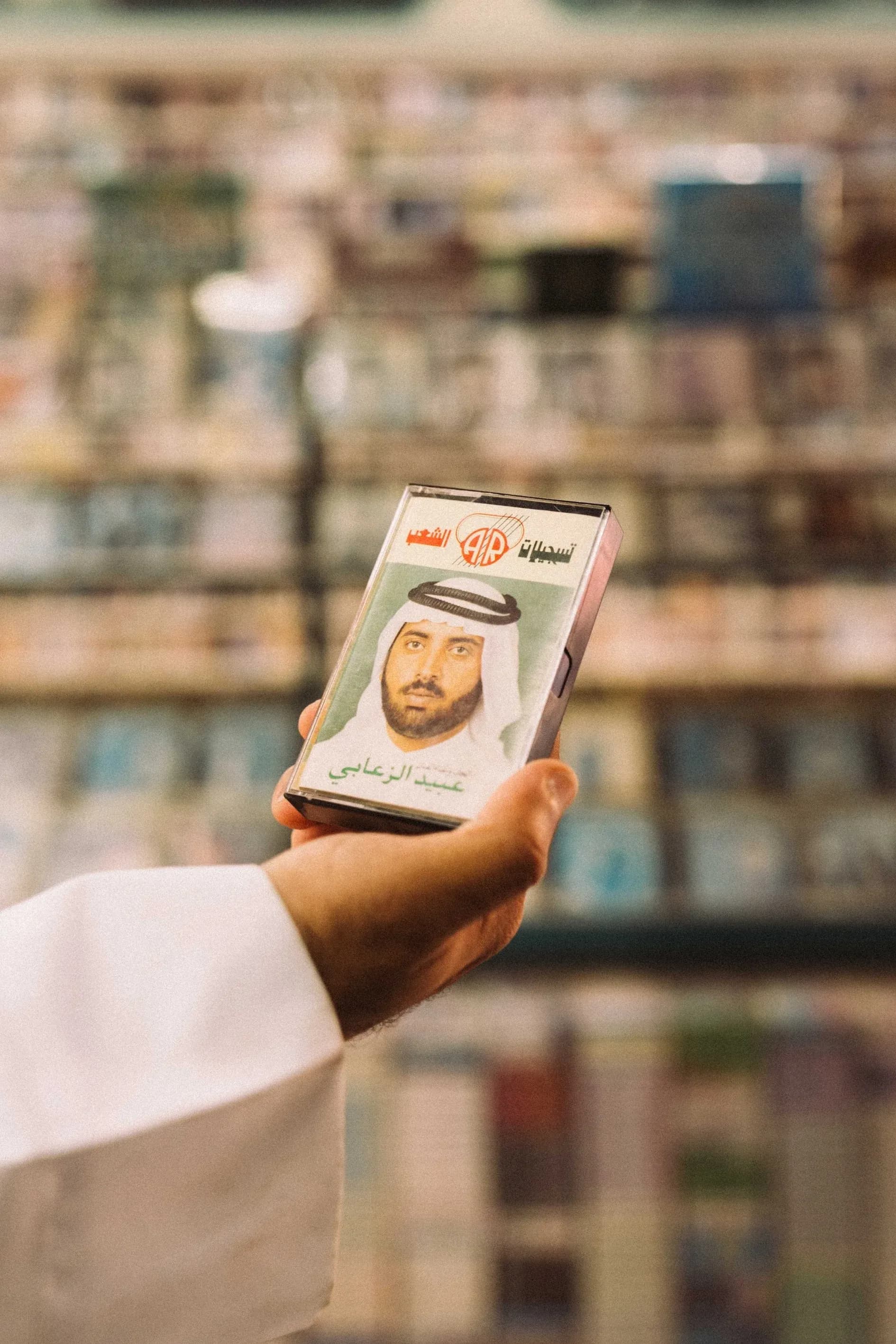
This one begins sometime in the late 1970s/early 1980s when a cab driver in Abu Dhabi had the good fortune of picking up a very special passenger: the renowned singer Etab (or Taroufa Abdel-Kheir Adam), who rose to fame in the region and, according to some dusty webpages, lived for a time in the UAE. During her stay in Abu Dhabi, this cab driver became her go-to chauffeur and in those moments moving around the city, as the conversations developed, his love for music started to grow. That simple curiosity turned into a passion and that passion became a journey and a collection of cassette tapes, vinyl records, and CD’s. And eventually a store stacked with all of the above.
Our connection to this store started off with the concept for a brand and a general conversation about the local music scene; where to find vintage records, where to speak to Emirati locals who truly understand chanting, orchestras, and traditional melodies and the general influence of regional musicians. It was all talk and theory until one of the team lit up with a 'I know just the place!'
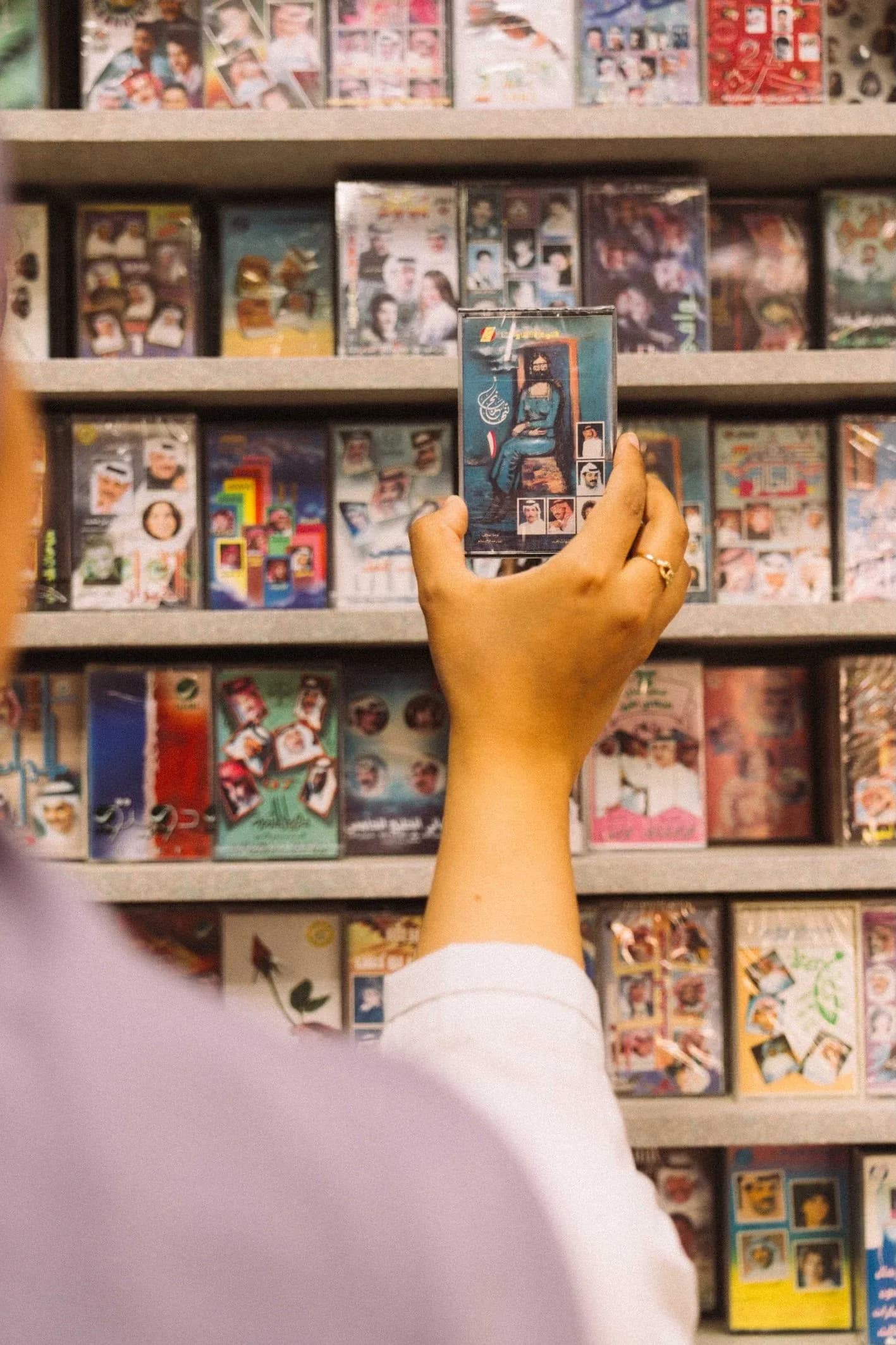
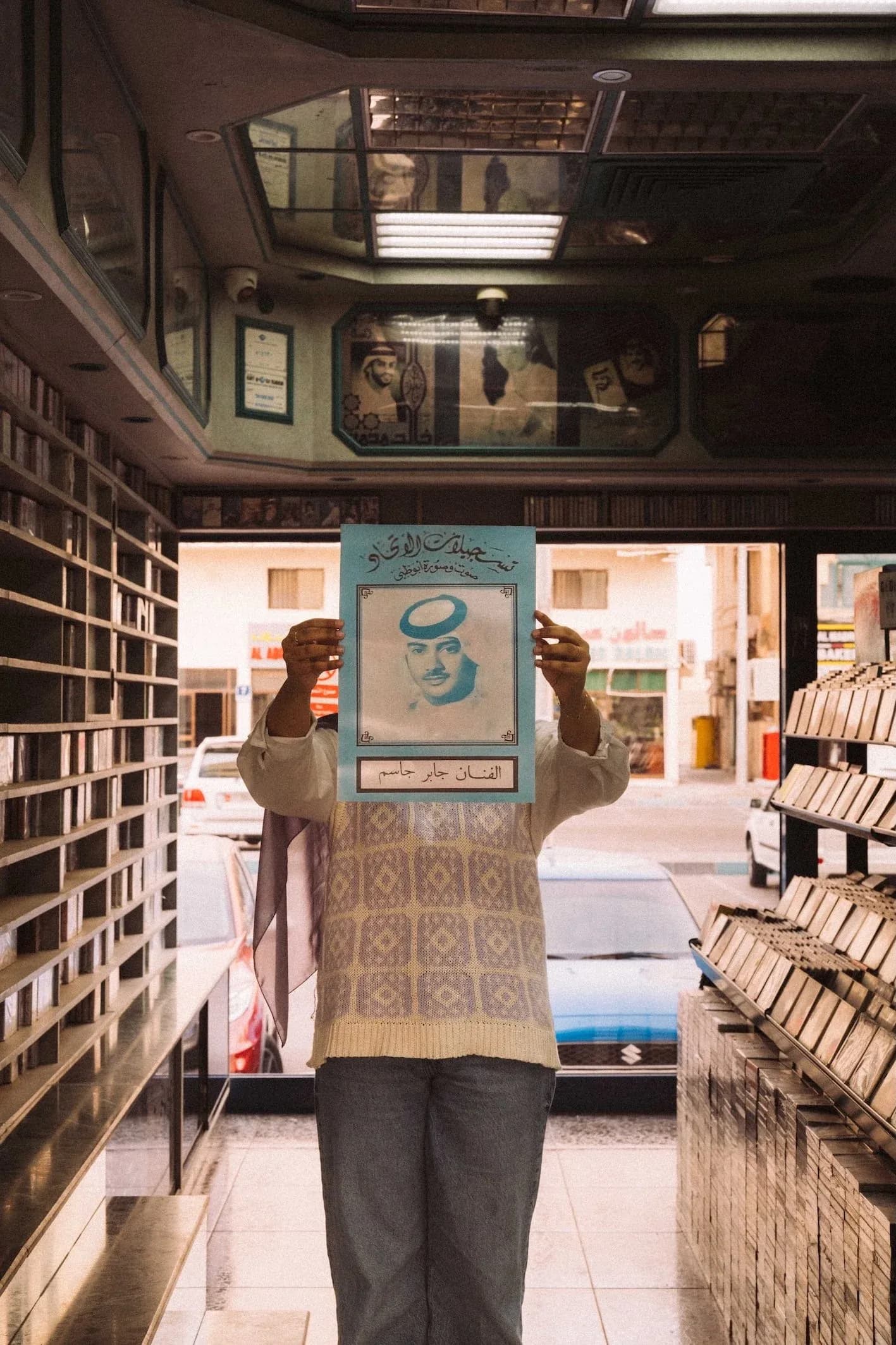
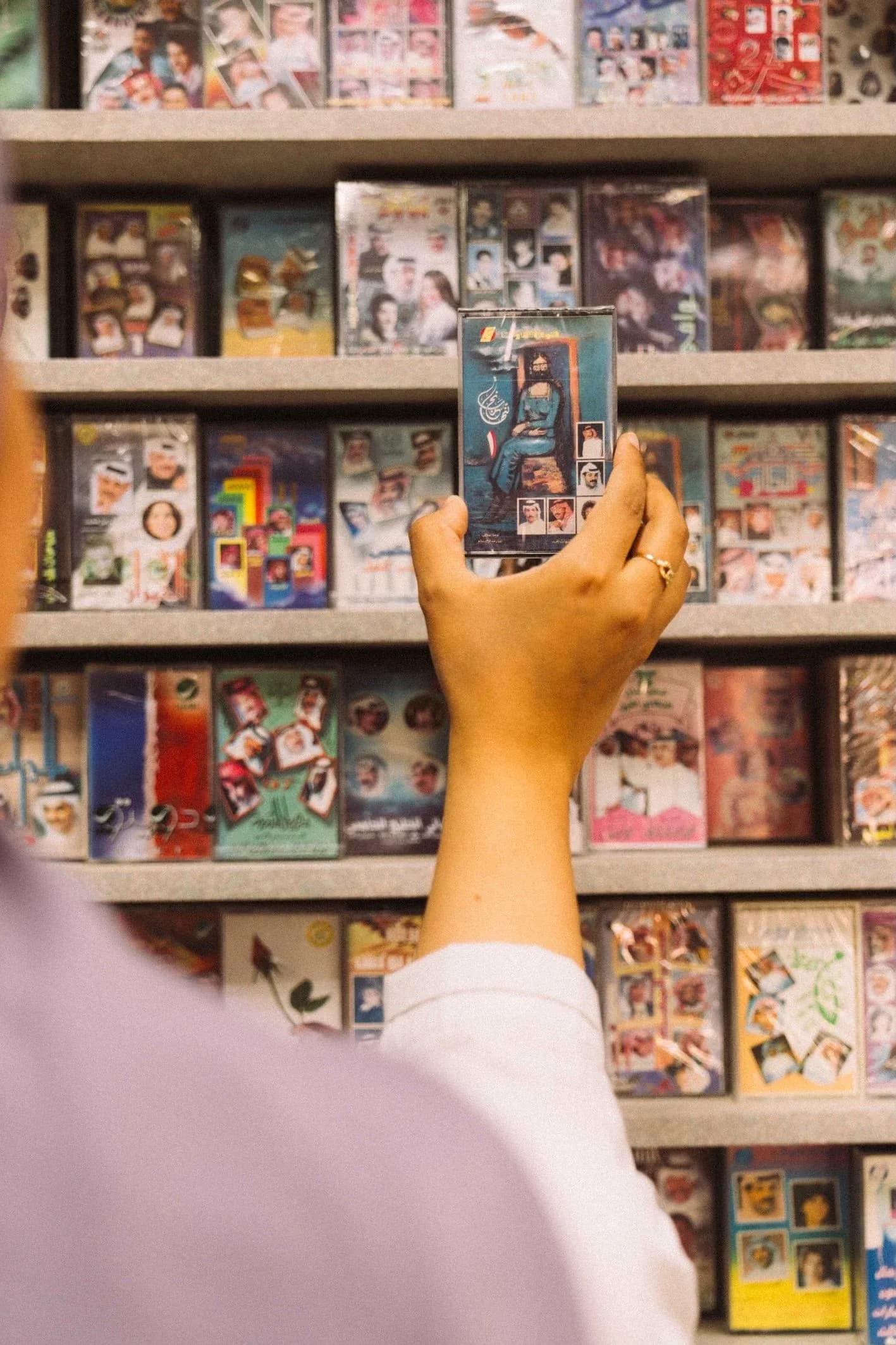
And then we time travelled.
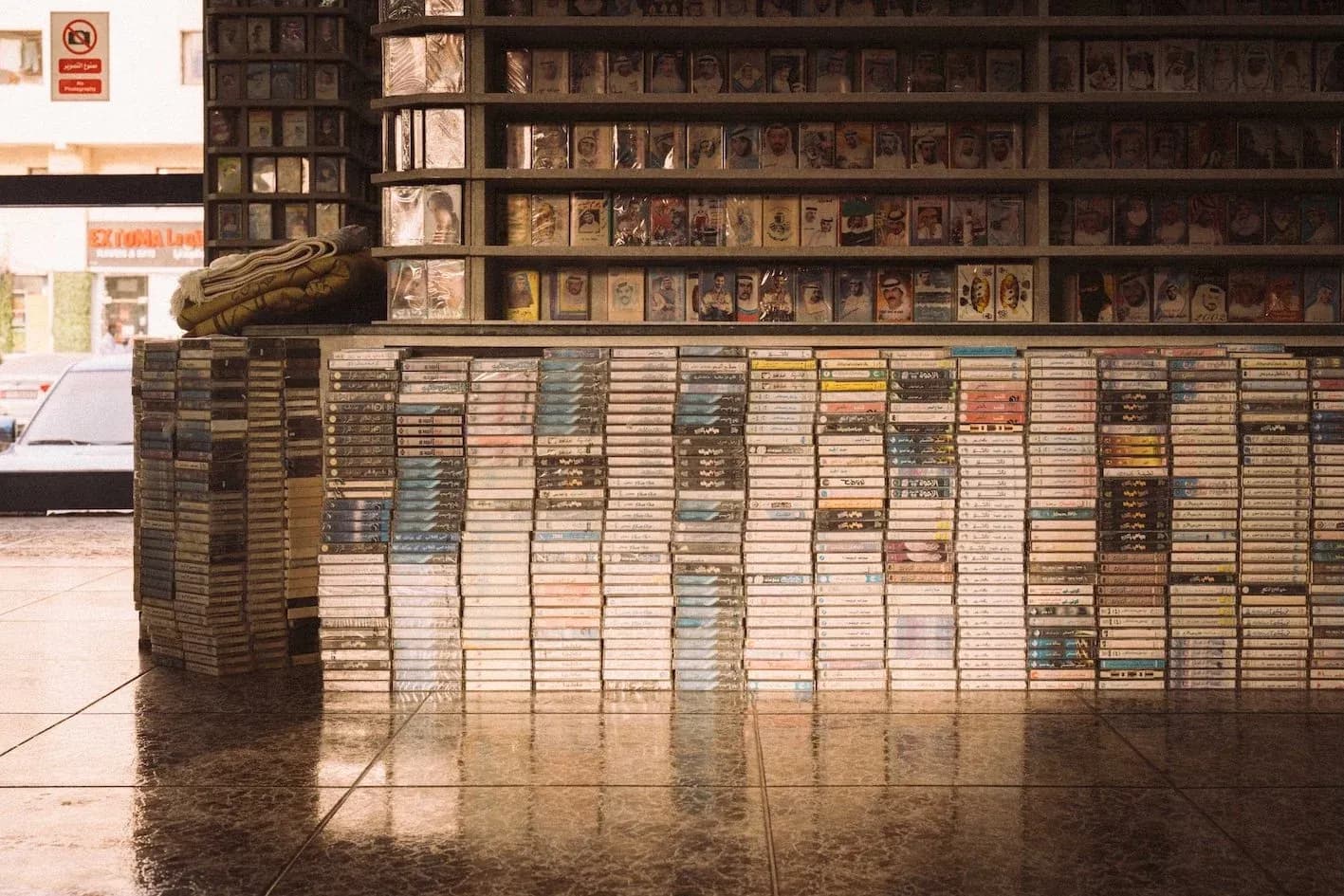
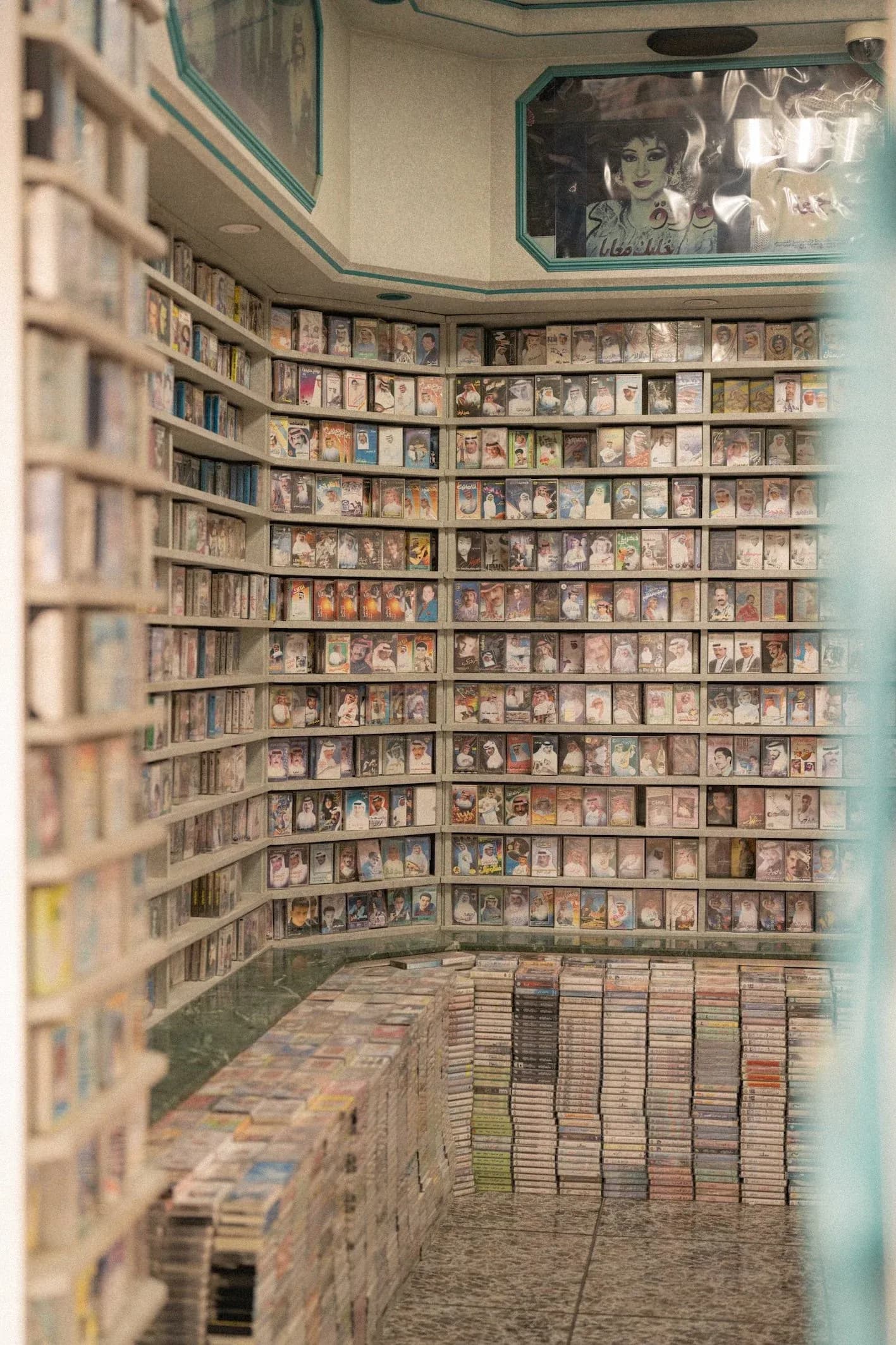
To a hidden gem of a record store, right in the heart of Abu Dhabi City, inside the kind of building that has lived through many different versions of the city. And inside? We’re surrounded by rows of cassette tapes, vintage posters, and the first newspaper published after the formation of the UAE. It was like stepping into a living memory, except it was real.
As we walked through the store, surrounded by walls upon walls of cassette tapes, we couldn’t help but wonder—how does this place manage to stay open? Surely, in a digital age of Spotify and Apple Music, where cassette tapes and CDs have long faded from mainstream use, this store must face major challenges?
The question was met with a knowing smile. “We don’t have such issues.” “Things were tough during the pandemic, but afterward, people began valuing these sentimental objects even more.” It opened the door for a new wave of appreciation—one where younger generations started falling in love with these memory keepsakes. It’s a place for those that miss the liner notes of a CD or the fold out sleeves of cassettes, where the package, the story and the art was as important as the music.
THE DESIGNERS PERSPECTIVE.
Nour, the designer chasing the tape design inspiration, explains what we really get from a visit like this:
Q: How did the store's overall design and atmosphere compare to your expectations?
Nour: It was much bigger than I had anticipated. I expected a small room with a limited collection of old records, but the store had an impressive variety. The biggest surprise was discovering that there was an entire second floor with a recording studio. That was completely unexpected—but a great find!
Q: What stood out to you about the graphic design of the cassette tapes, posters, and records?
Nour: The two things that struck me the most were the fonts and the colors. I’ve incorporated these directly into the concept I'm developing, which is centered around connecting generations through a retro-style graphic design. Using familiar design elements helps create that bridge between generations.
Q: Were there any specific graphic elements that caught your attention?
Nour: Yes. I noticed some intriguing symbols on the sides of the cassette tapes—one looked like a circle with a diamond, almost like an eye. I’m not entirely sure what they mean, but I found them fascinating and started incorporating similar geometric elements—like arrows—into my own designs. They make for really interesting bullet points.
Q: How did the store’s design and visuals contribute to your overall experience as a designer?
Nour: I saw so much more than I expected. There were CDs, a vintage radio, even a recording machine—it felt like stepping back in time. Everything, from the store’s logo to its booklets and color scheme, gave off a strong nostalgic feel. Even the interior design reinforced that feeling. It was a full sensory experience.
Q: What drew you to cassette tapes in particular?
Nour: My dad was an avid cassette tape collector and owned an extensive collection. I wanted to see what I could find because that era isn’t as distant as it might seem. Many music festivals are drawing inspiration from vintage music and graphic design—it’s really interesting to see how these styles are being reinterpreted today.
What started as a casual conversation led us to a place frozen in time—where music, memories, and history were still alive, just packaged a little differently to how we see it now. And, it’s exactly what we were looking for and exactly why we put in the effort to find and visit these places, because there’s a whole experience you get in a place like this that you’ll never find on google. So we didn’t literally travel through time, but it sure did feel like it stood still for a little while.
And since we’re on the topic of finding hidden gems in amongst the superblocks of Abu Dhabi we have to link to the Department of Culture and Tourism series Hidden Treasure, highlighting may more of these interesting spots.
And even more bonus stuff!
Here’s a project from a few years ago capturing the evolution of Egyptian cassette tape design.
And the instagram if you want to see all the beauty up close.
تدوينات أخرى
- المطاردة الكبرى لأبراج المياهسبب وجيه جداً لترفع رأسك، وأمر مقبول تماماً أن تصبح مهووساً به قليلاً.
- حقيبة زنجبارلماذا استحقت قطعة قماش من شراع أن نحتفظ بها لسنوات.
- اتصال أبسطهاتف أرضي بلا شاشة للأطفال (وربما لنا نحن أيضاً).
- في حبّ Helveticaخط واحد ليحكمها جميعاً. دعنا نشرح السبب.