一本の
自分で
本文
One of the privileges of being a maker, beyond making things yourself, is being able to watch other people make the things you can’t make. Make sense?
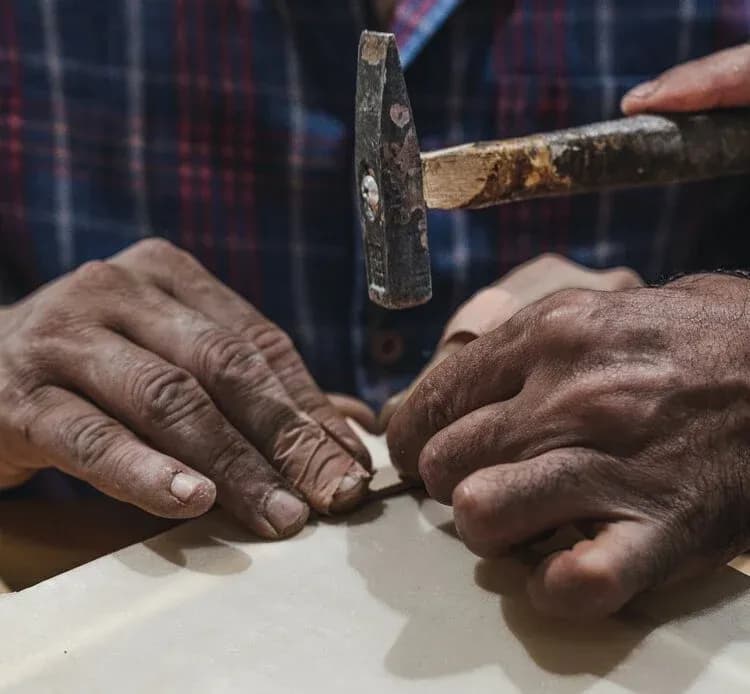
Recently we were able to sit and watch a master craftsman custom make a rababa - a traditional, single-stringed instrument popular in Arabic bedouin music.
The smell of sawdust and industrial glue was splendid, and watching an instrument come together through two pairs of rough hands and some basic machinery was impressive.
Here’s a little behind the scenes tour of the process.
Wood, cured and dried for years, because that’s what is needed.
Simplicity. No laser cutters, 3D printers, or industrial production lines here. Just hands and tools.
At Fabrica, making is never just about the end result. We’re motivated by the stories behind what we make, the stories of the makers, the history, the heritage and the skill all coming together into something physical.
It’s materials, patience, tools, delicate hands and, in this case, a bit of trial and error as rababa’s are not commonly made instruments anymore.
Many thanks to Bait Al Oud for letting us sit in on the process.
With decades in the profession, Bait Al Oud is working to bring Arabic musical instruments back into the mainstream and into a contemporary expression.
They’ve got a long history in making Ouds, violins, cellos and other stringed instruments and beyond that, they provide lessons, put on concerts and host musical exhibitions.
If you’re in Abu Dhabi, check them out here.
The nearly finished piece. Varnish and a single string to go.
ほかの記事
- 給水塔、大捜索空を見上げる、とてもいい理由。ちょっとくらい夢中になっても、まったく問題ありません。
- ザンジバル・バッグ一枚の帆布の切れ端を、何年も取っておいた理由。
- ダイヤルを、少し戻す子どものための、画面のない固定電話(もしかすると、私たち大人のためにも)。
- Helveticaへの愛ゆえにひとつの書体は、すべてを統べる。その理由を説明させてください。