A Living Archive of the Sea
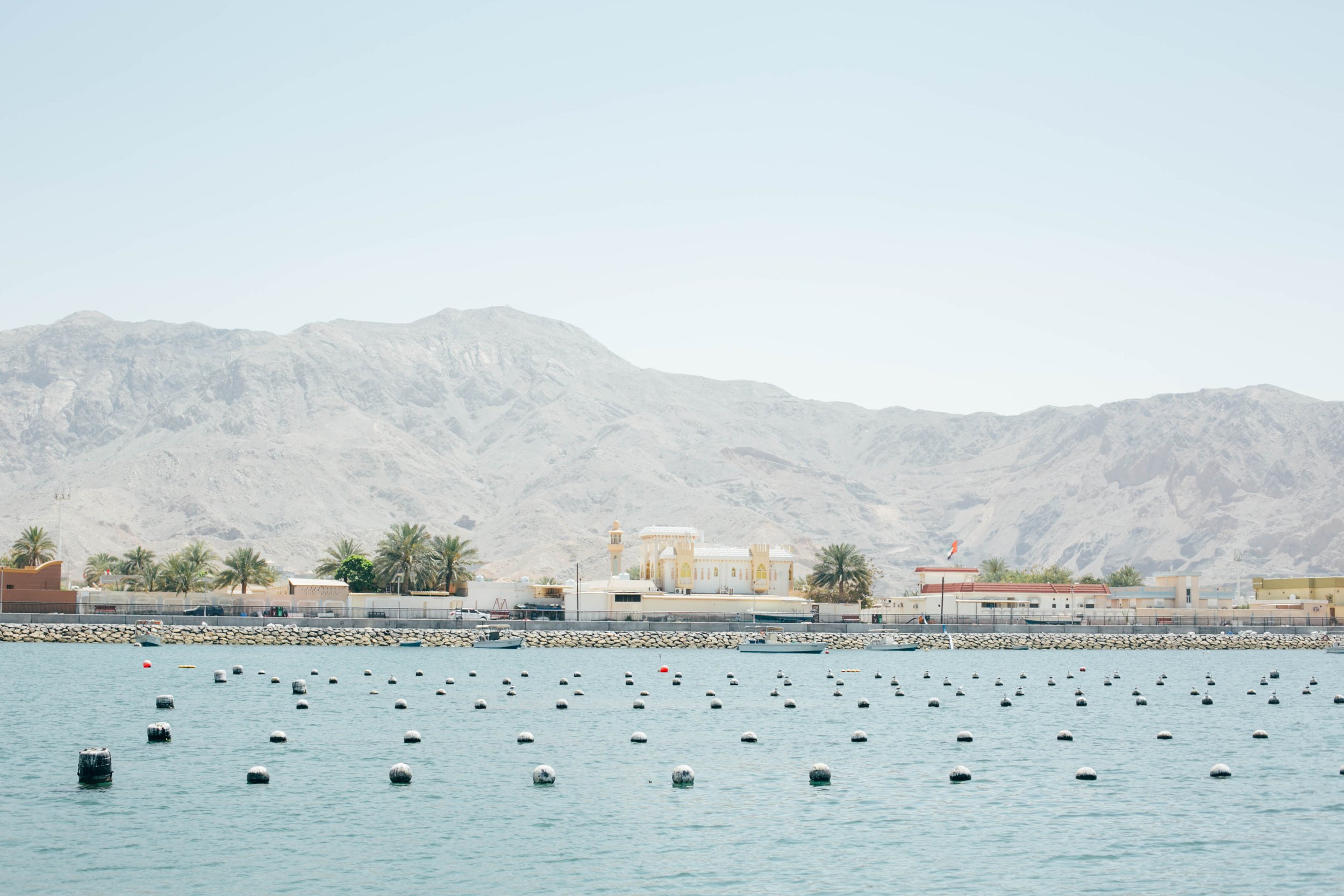
On the northern edge of Ras Al Khaimah, just before the mountains meet Oman, there’s a small fishing village that tells a salty, shimmering, sea-bound story we’re thankful to keep alive.
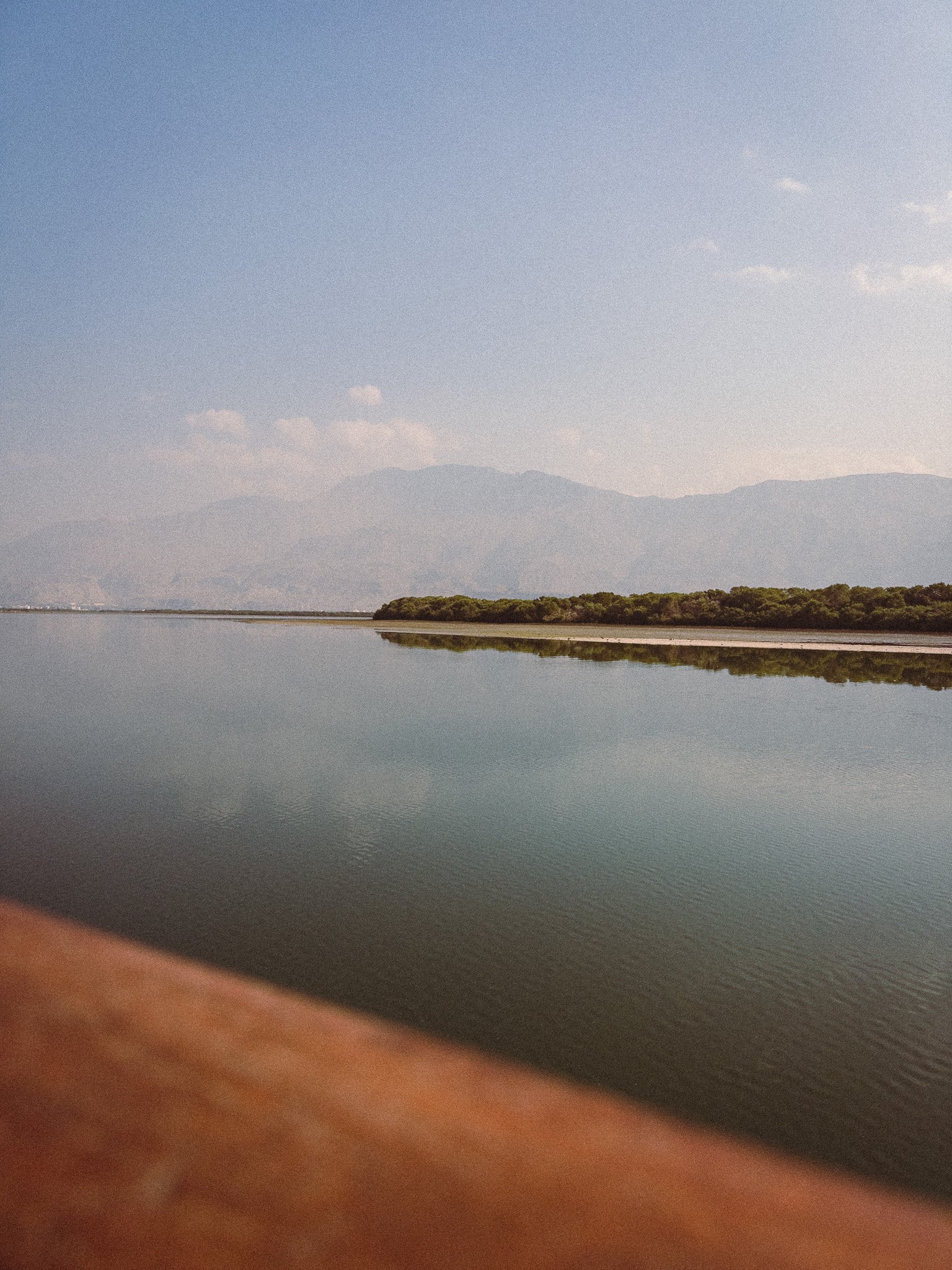
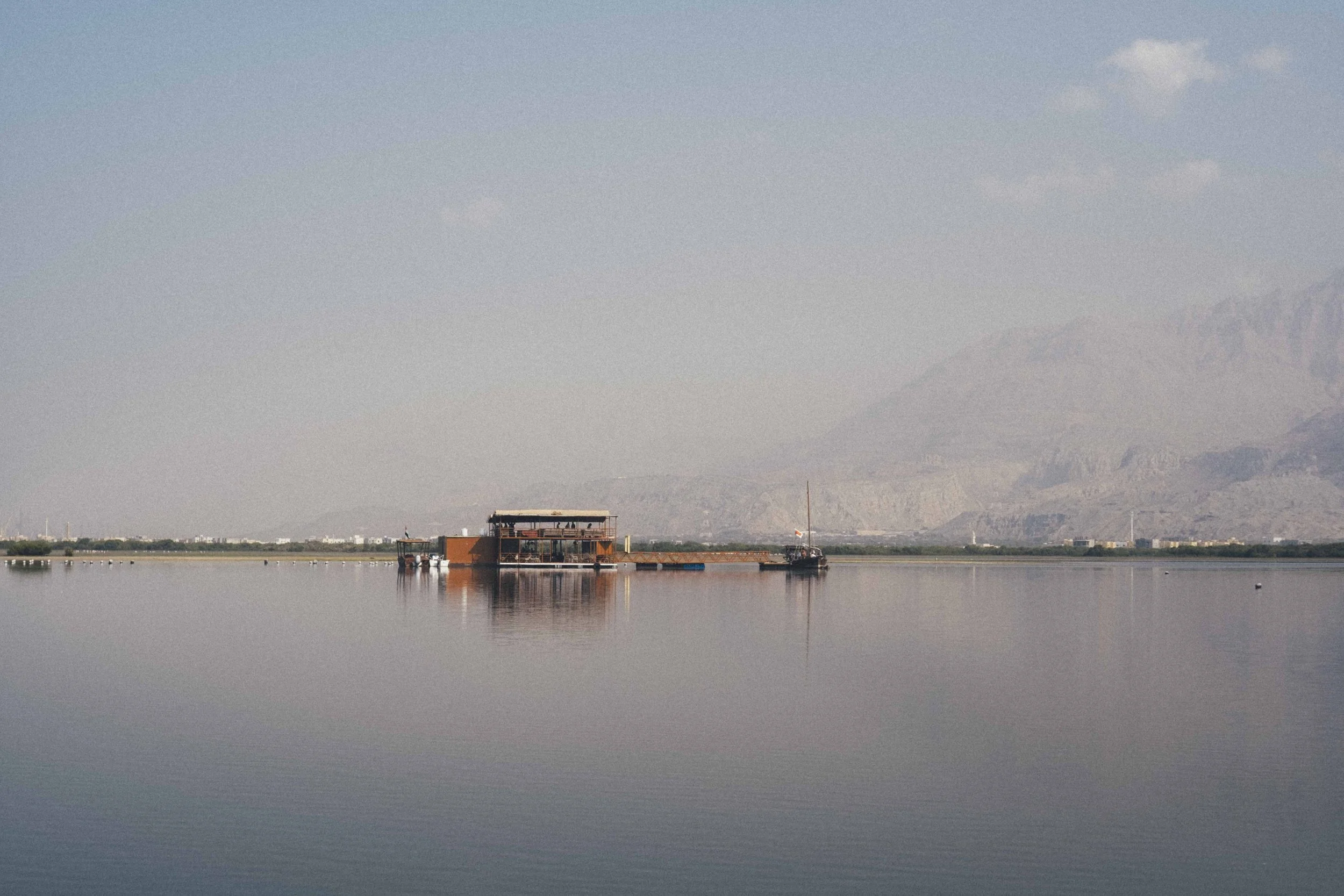
We’ve visited Al Suwaidi Pearl Farm numerous times now, and each trip brings something new. The farm is tucked away in Al Rams, an old fishing village that smells of fish and diesel, and pulses with the rhythms of tide and trade. It sits in a quiet bay, sheltered by mangroves on one side and the Hajar Mountains on the other. Here, camels roam the lowlands and flamingos wade through the shallows, reminders that the farm belongs to a wider landscape of life and movement.
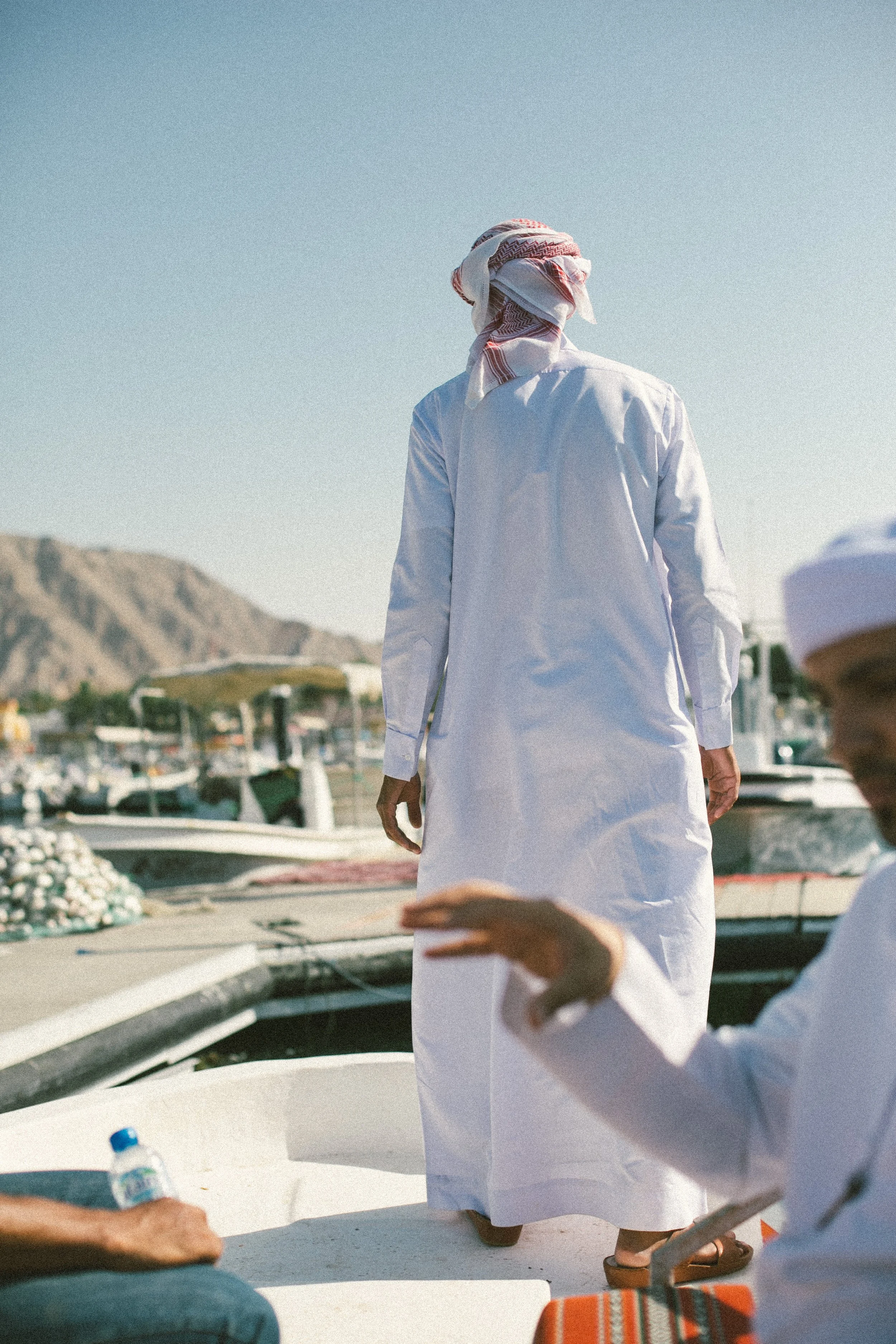
To get to the pearl farm, you go by boat. For some reason we seem to always visit around summer when the sea is hot and the breeze minimal. It’s the kind of heat that clings to skin, to clothes, to memory. But once you arrive, everything softens into calm. The pearl farm floats humbly in the middle of the bay, a simple barge-like structure surrounded by rows of oysters suspended in a turquoise and green mix of water. This is where the work begins. Pearls were once the heart of the UAE economy. Long before oil, the Gulf’s natural pearls were traded across the world and were considered among the finest ever found. Entire communities depended on them: divers, captains, haulers, traders, families. The work was hard and demanding. Divers would plunge to depths of 20 meters with nothing but a nose clip and a stone weight. No oxygen. Just breath and bravery.
At Al Suwaidi Pearl Farm, this legacy is carefully preserved. You’ll find old logbooks, wooden storage boxes, and tools passed down through generations, simple, ingenious devices used by those who knew the sea best. And then there are the pearls themselves. Each one shaped by time, water, and chance. Their uniqueness is part of their beauty. But more than that, they represent something rare, resilient, and grounded in the past, carrying forward the story of the sea.
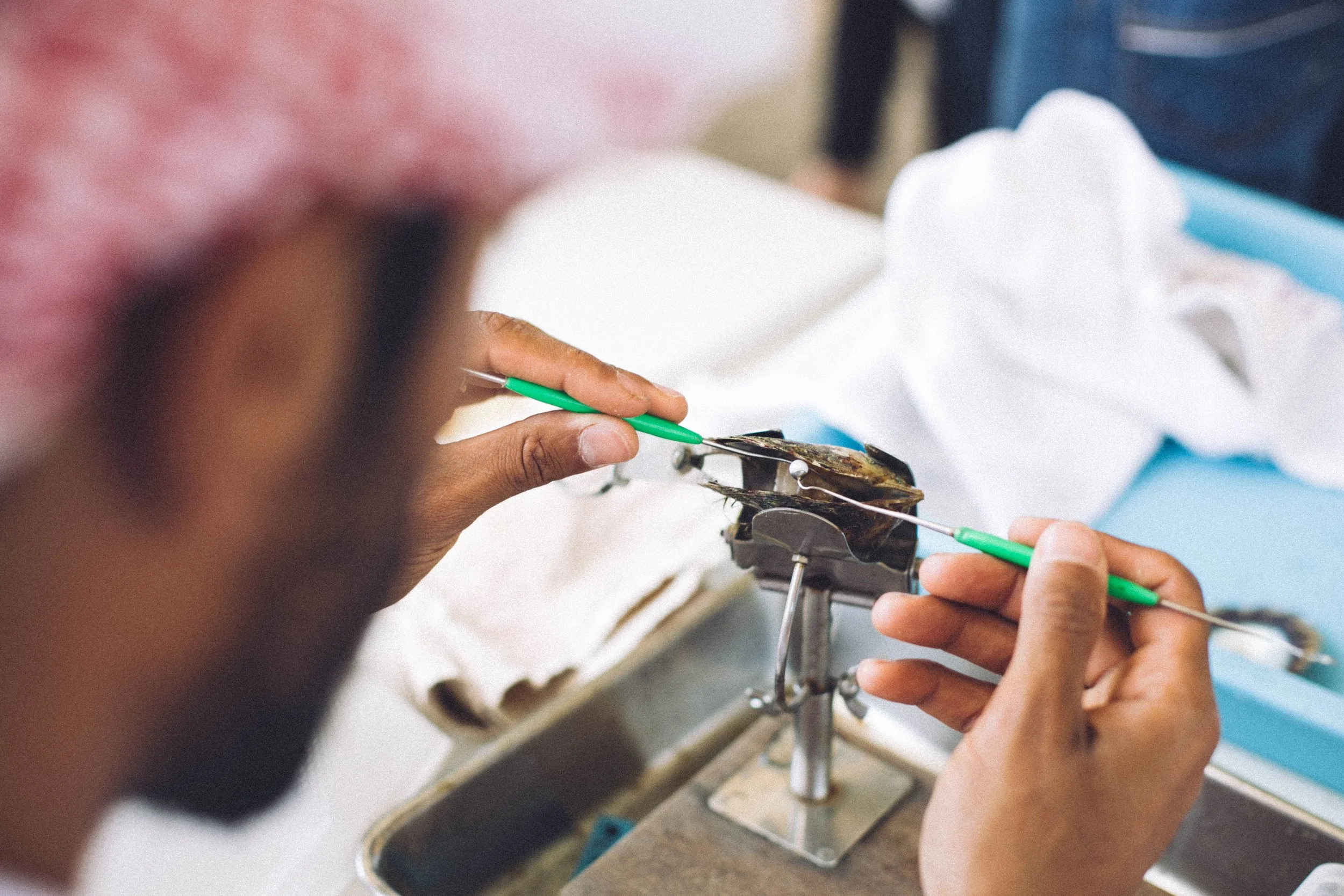
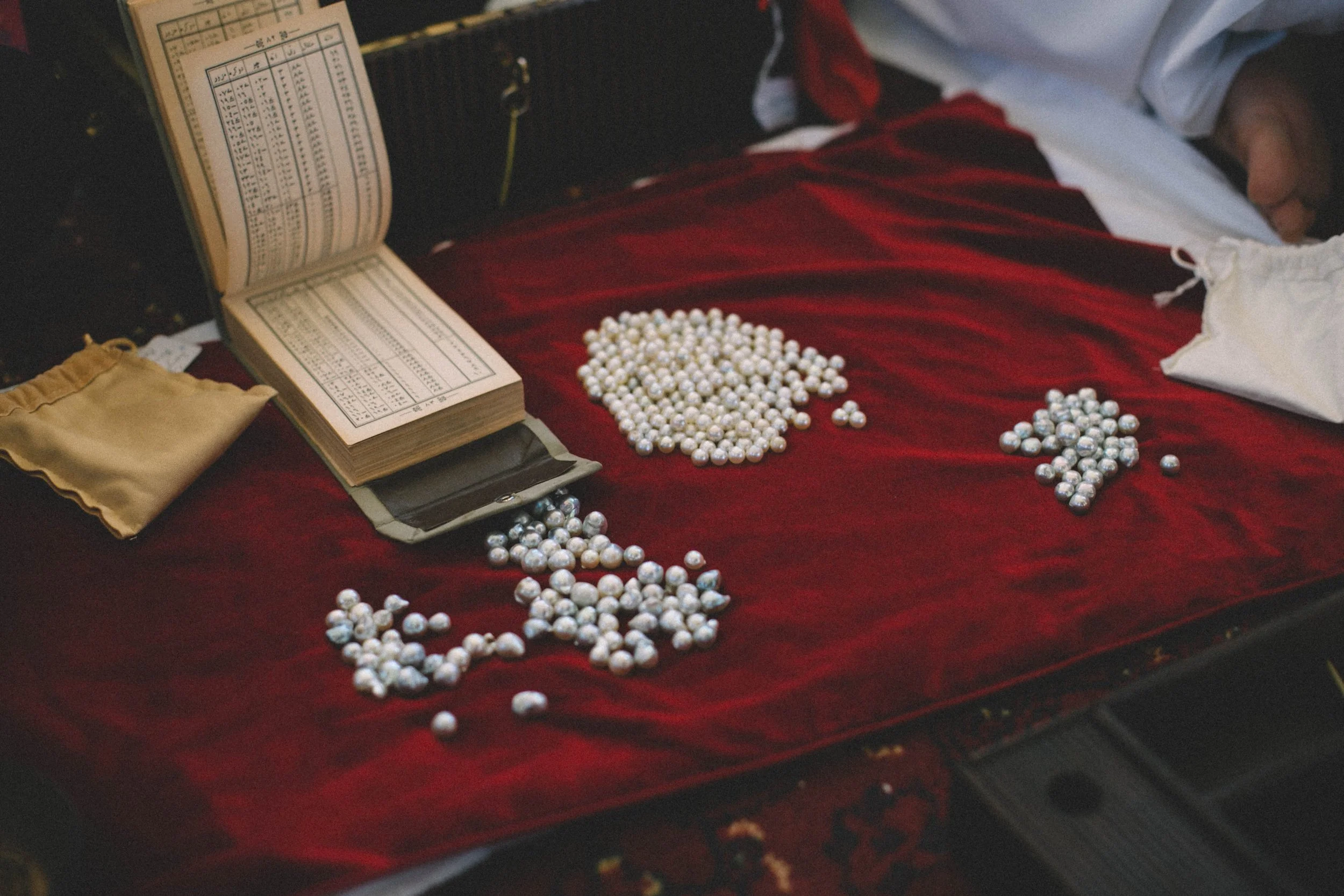
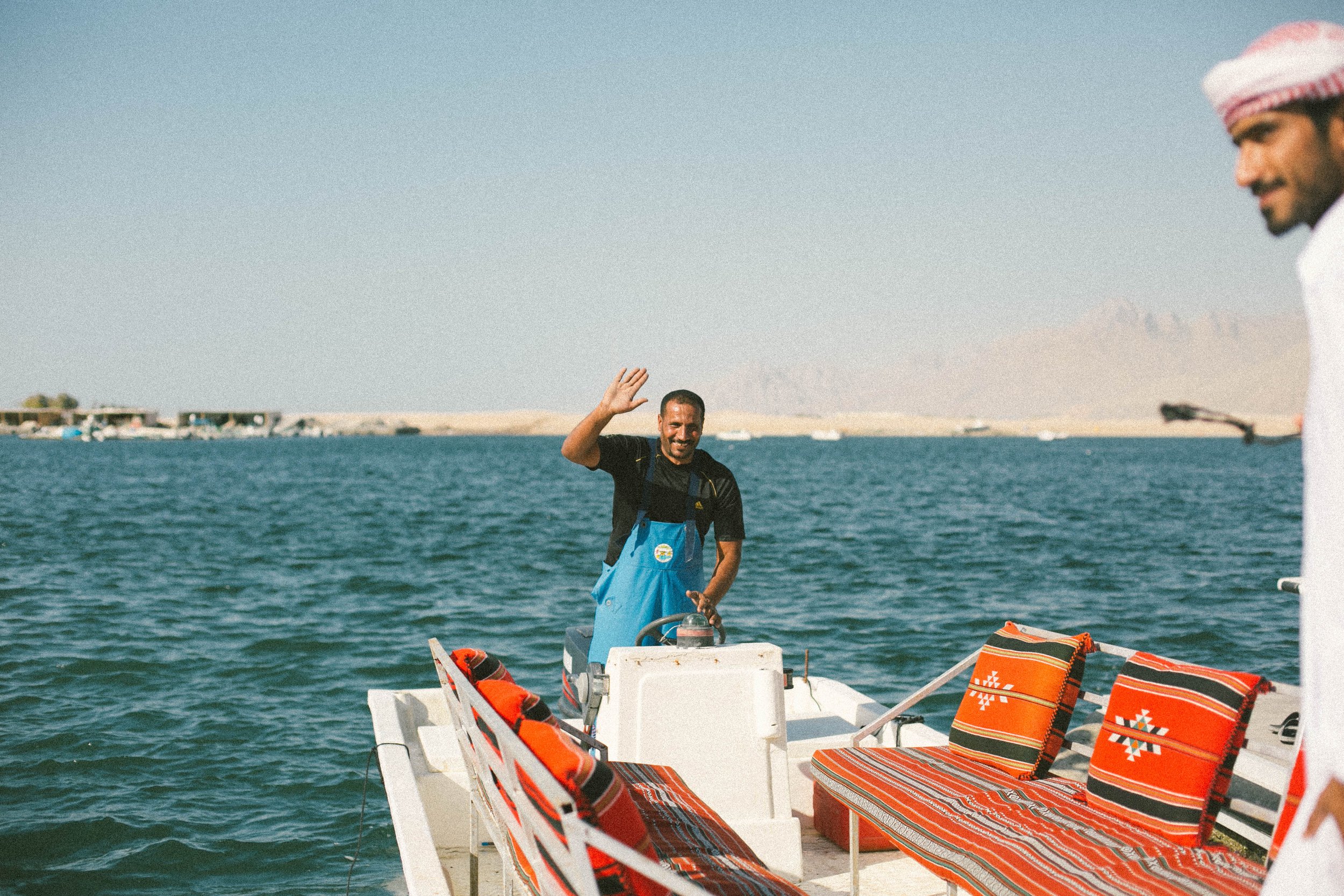
Today, pearl farming is no longer about commerce. It’s about memory and preservation, a tribute to heritage, like Khous, Sadu, and Talli. These traditions tell stories not just through objects, but through process, place, and people. At Ripple Collective we return to places like Al Rams not just to source, but to connect, to listen, to learn. There’s always magic in leaving the studio and connecting to real life stuff, especially when it’s right in history and stories. These trips don’t always yield a product or a tangible result, but they always leave us with something more: perspective, purpose, and inspiration.
Wanna go? You can book tours HERE.