
The Great Water Tower Hunt
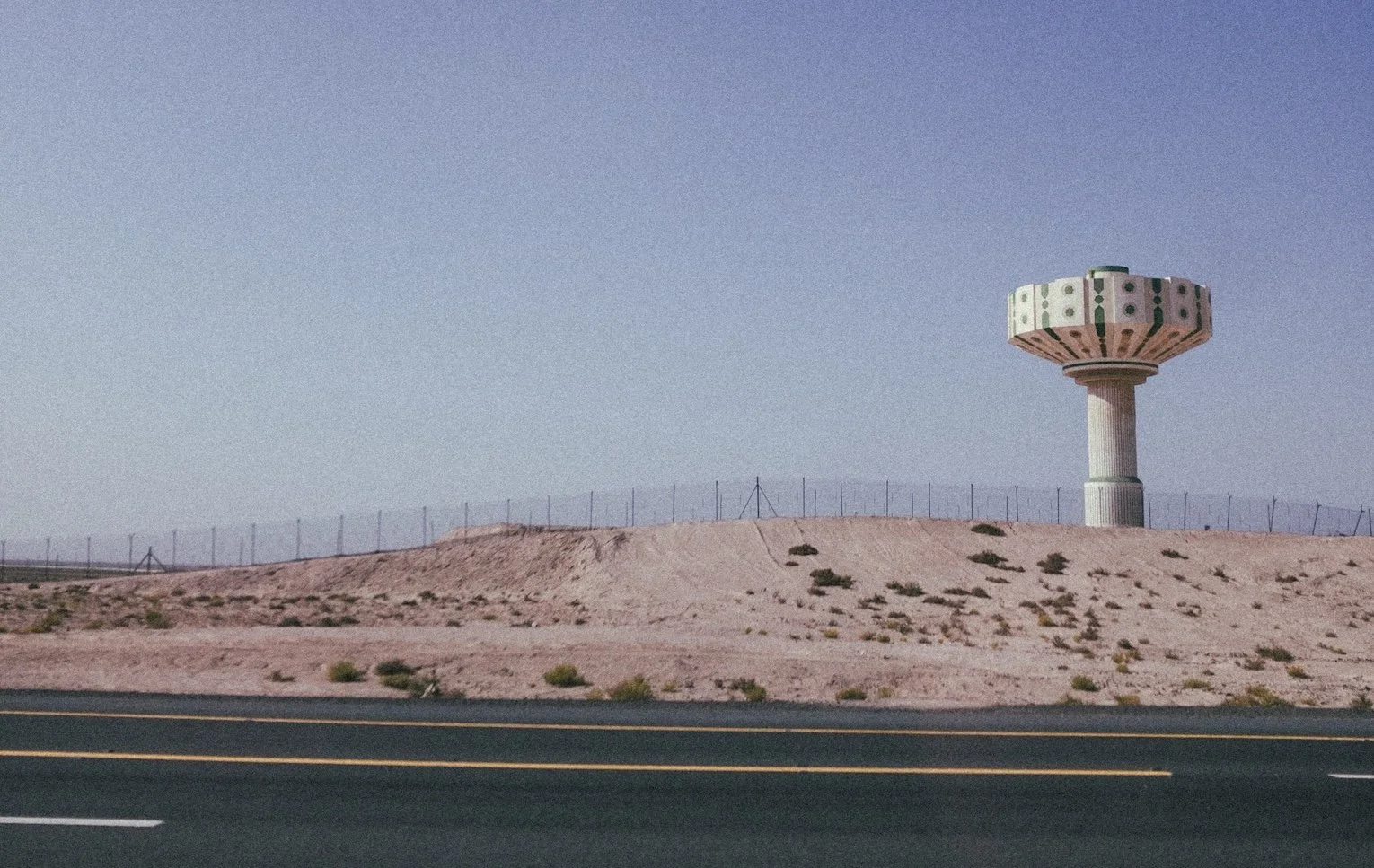
Water towers - they’re the UAE's first high-rise structures. Functional objects built out of necessity to manage a scarce and vital resource that along the way became expressive objects too. Some look almost futuristic. Others have decorative details and geometric patterns that seem unexpectedly thoughtful for something built simply to store water. Our design eyes are always locking on to them and we knew there was a creative adventure in the water towers of the UAE somewhere...
A Little Bit of History
Back in the 1950s, before water towers rose above the UAE's cities, access to water was far from guaranteed. In several places across the Emirates, people relied on wells or seasonal rain pools; contaminated water from these sources frequently led to outbreaks of diseases like cholera and typhoid. The arrival of water towers was one of the most significant moments in the nation’s growth, where water management, public health and urban development underwent a massive shift.
One of our first towers of interest was the Khalidiya water tank in Abu Dhabi. Before it was constructed in 1965, residents relied on brackish water pits dug into the sand, while additional water was transported into the city from elsewhere. On the orders of Sheikh Shakhbut bin Sultan Al Nahyan, a pipeline stretching more than 120 kilometers from inland wells near Al Ain was constructed to feed this large storage tank and provide reliable freshwater to a rapidly growing city and its people. The tank became known as Niqa bin Ateej, which wasn’t a coincidence. In Emirati Arabic, “niqa” means an elevated sandy hill, exactly what the tank was built on, overlooking Abu Dhabi as it expanded below and eventually rose above it.
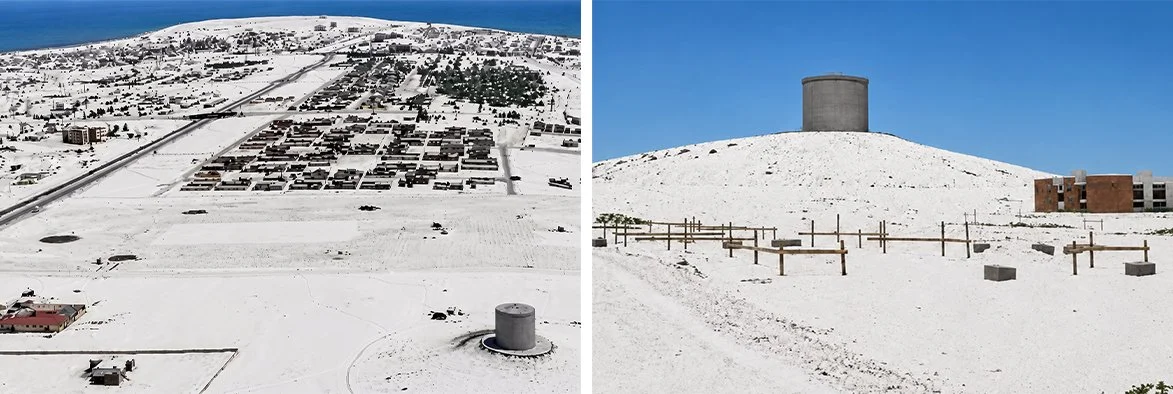
Khalidiya water tank known as Niqa bin Ateej. Photograph from 1971. // Photo: @musabahalmazrouei.
Dubai was also working to secure a reliable freshwater supply. A key figure was water engineer Eric Tulloch, who Sheikh Rashid invited to Dubai in 1959 after hearing about his work in Qatar. Tulloch went on to locate freshwater sources in Al Awir, and soon after, pipelines were laid across the desert into the city.
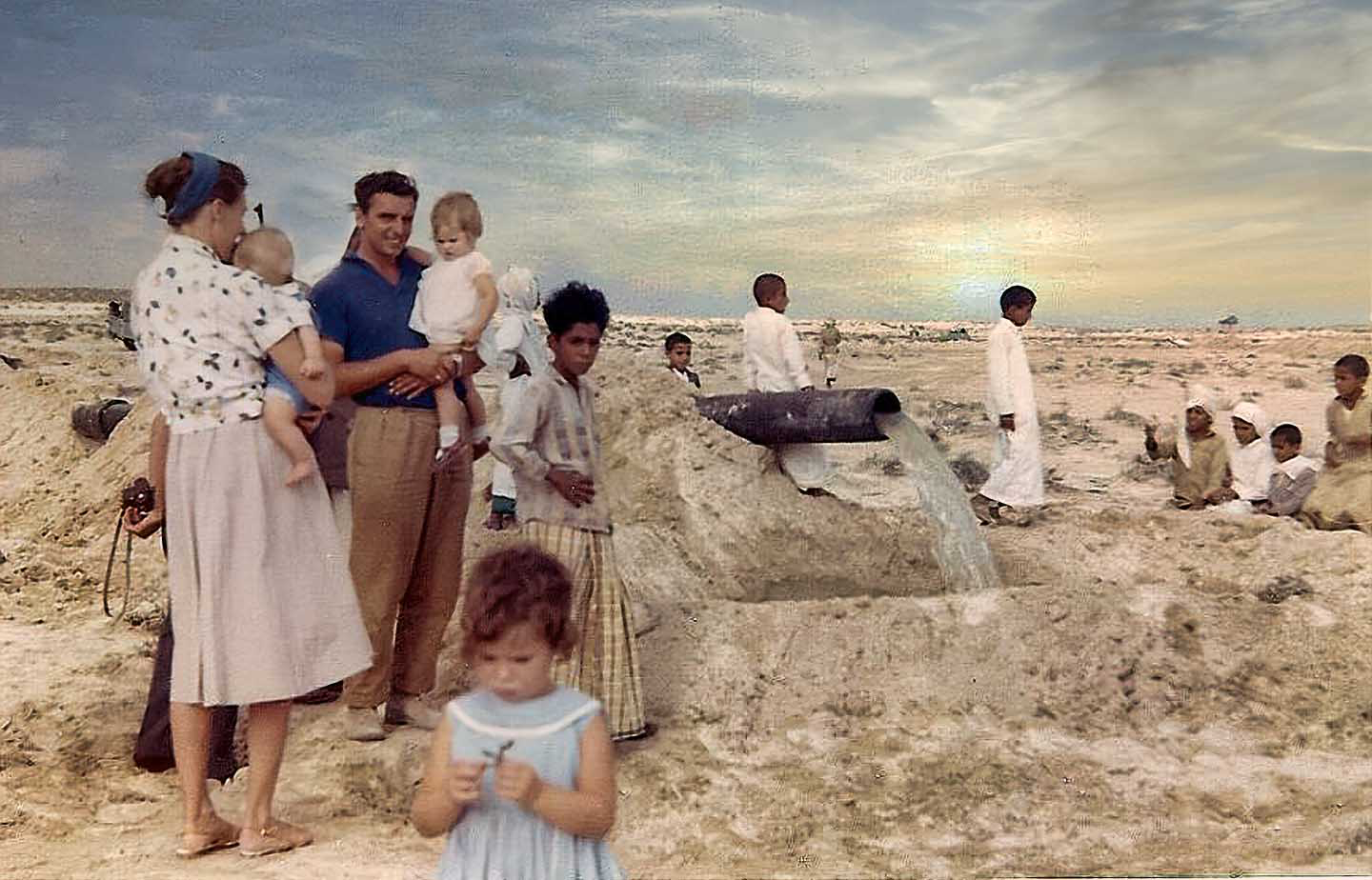
Eric Tulloch's family watch freshwater flow in Dubai. // Photo: Dubai As It Used To Be.
Pumping water across the desert was only half the battle. To actually make it flow out of a residential outlet, the network needed pressure. In a largely flat landscape, the easiest way to create that pressure was through height, so engineers lifted huge storage tanks around 20 meters into the air and let gravity do the rest. (Suddenly, the Khalidiya tank sitting on top of a hill makes a lot of sense).
But water towers were not just water suppliers. They were the country's very first high-rise structures, standing out on skylines before skylines really existed. Rising above their neighborhoods and visible from afar, as the Khalidiya water tank did, they became landmarks and points of orientation long before GPS existed, helping residents navigate growing cities and find their way home.
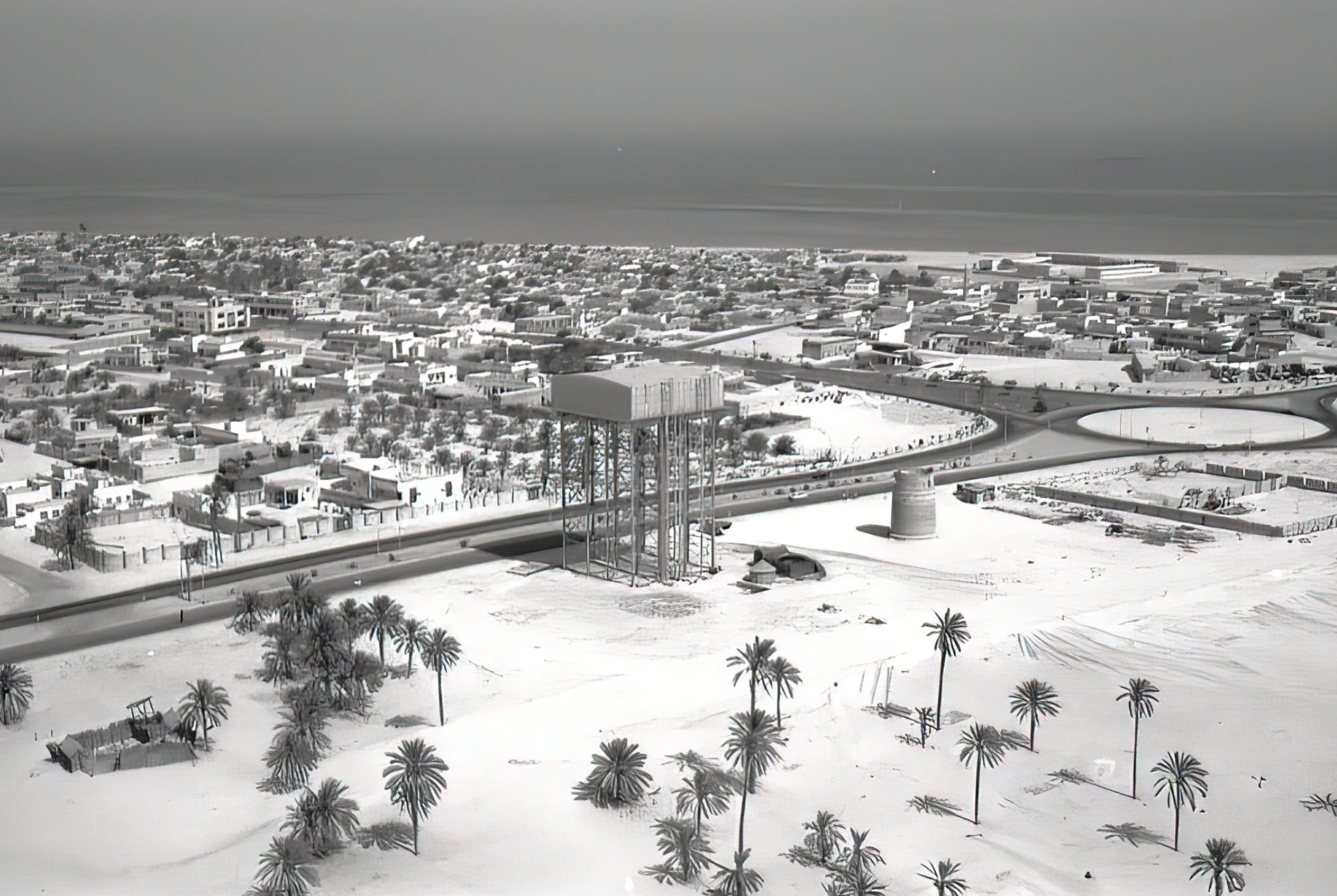
Water towers became a familiar feature of the UAE’s growing skyline // Photo: Dubai As It Used To Be.
And then, slowly, the towers started to disappear.
As cities expanded through the 80s and 90s, the towers could no longer keep up with the demand. Residents started rigging up their own electric rooftop pumps, and eventually, modern desalination technology took over completely, a system that continues to sustain the UAE's water needs.
Today, the old water towers of the UAE mostly exist in a state of suspended utility. Some have been dismantled. Others remain as receding backdrops within our cities, nearly absorbed by the progress they helped make possible. But look carefully, and traces of these landmarks still appear. These surviving towers stand both as fragments from an earlier version of the UAE and symbols of the nation's efforts to ensure water security during its formative years.
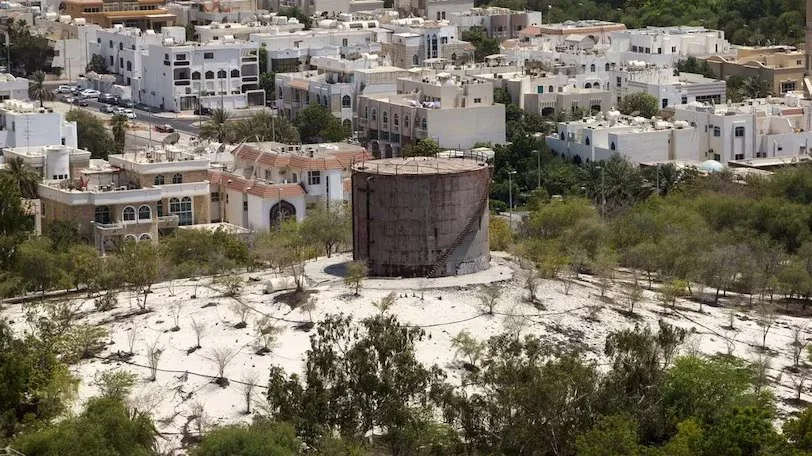
Khalidiya water tank sitting amongst residential villas. Now officially designated as one of Abu Dhabi's protected Modern Heritage Sites. // Photo: Christopher Pike, The National.
Going Tower Hunting
And that's where our design curiosity takes over. We wanted to explore the visual story of these beautiful now old water towers. We set ourselves a small challenge: to find as many surviving water towers across the UAE as possible. To do so, we launched an internal studio competition and created a shared map that you can check out here. Every tower discovered was pinned and extra points were awarded for photographs and sketches. Within a month, our team had mapped and documented more than a hundred towers across the UAE. And the more we looked, the more personality we found.
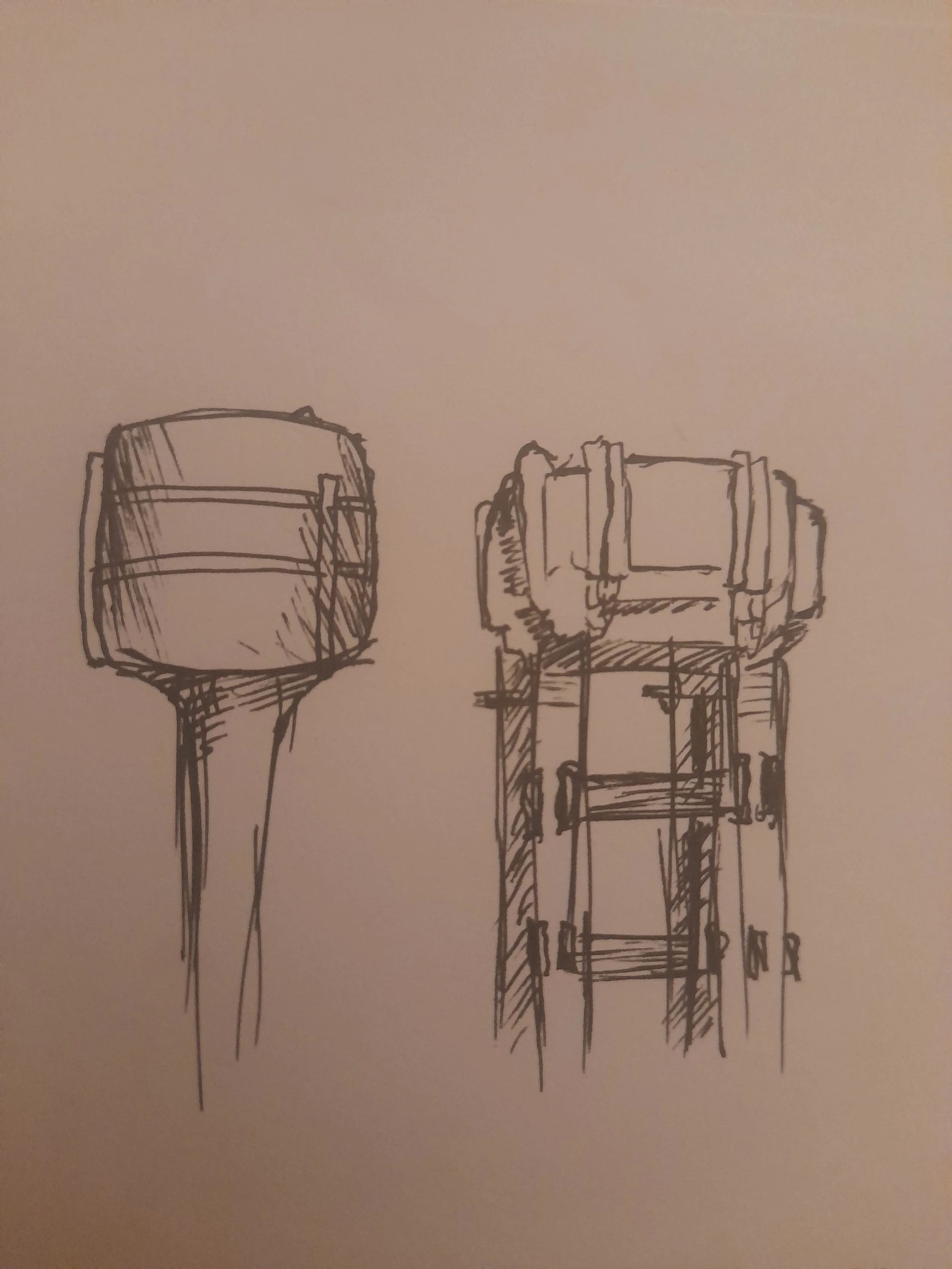
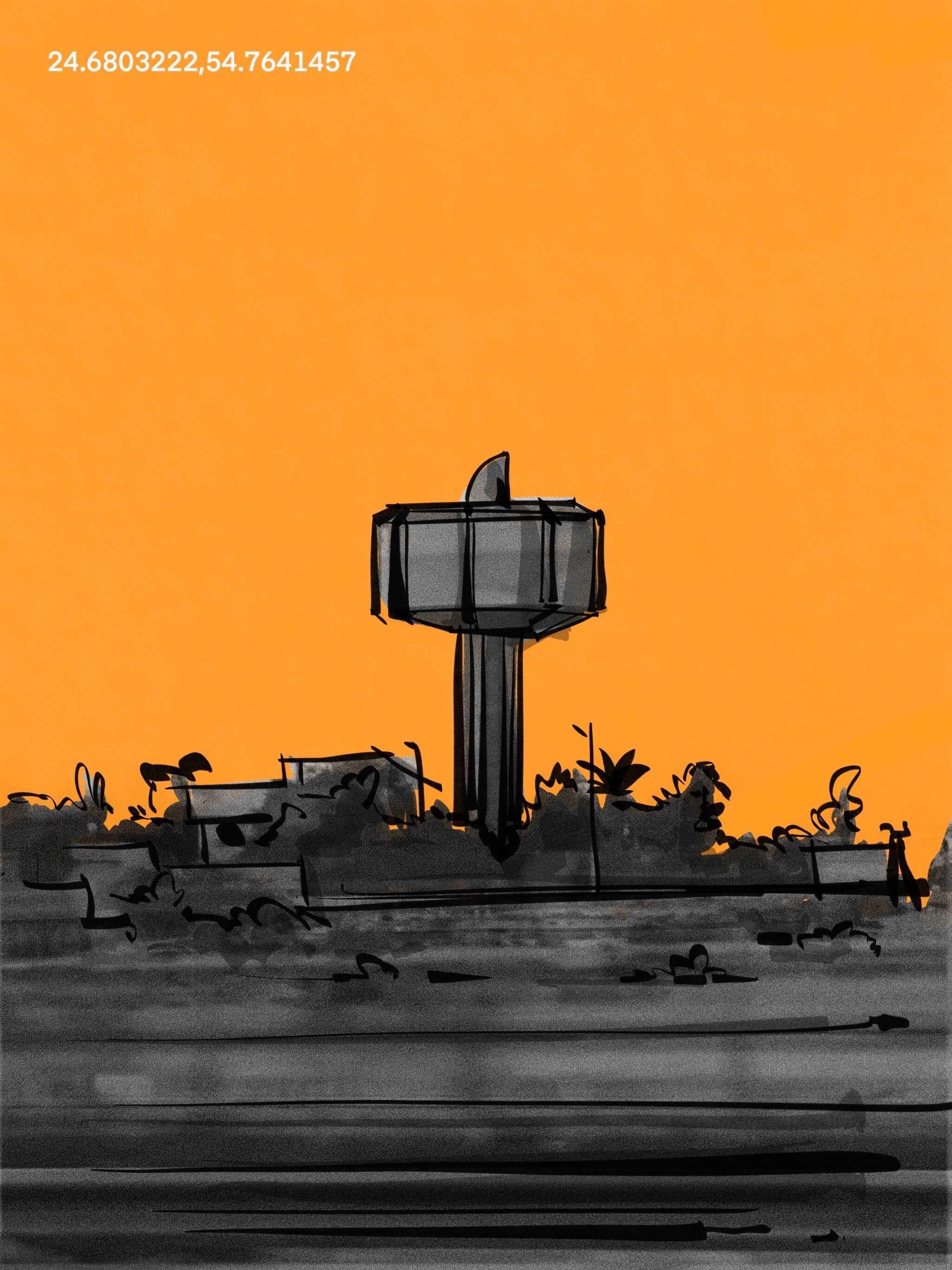
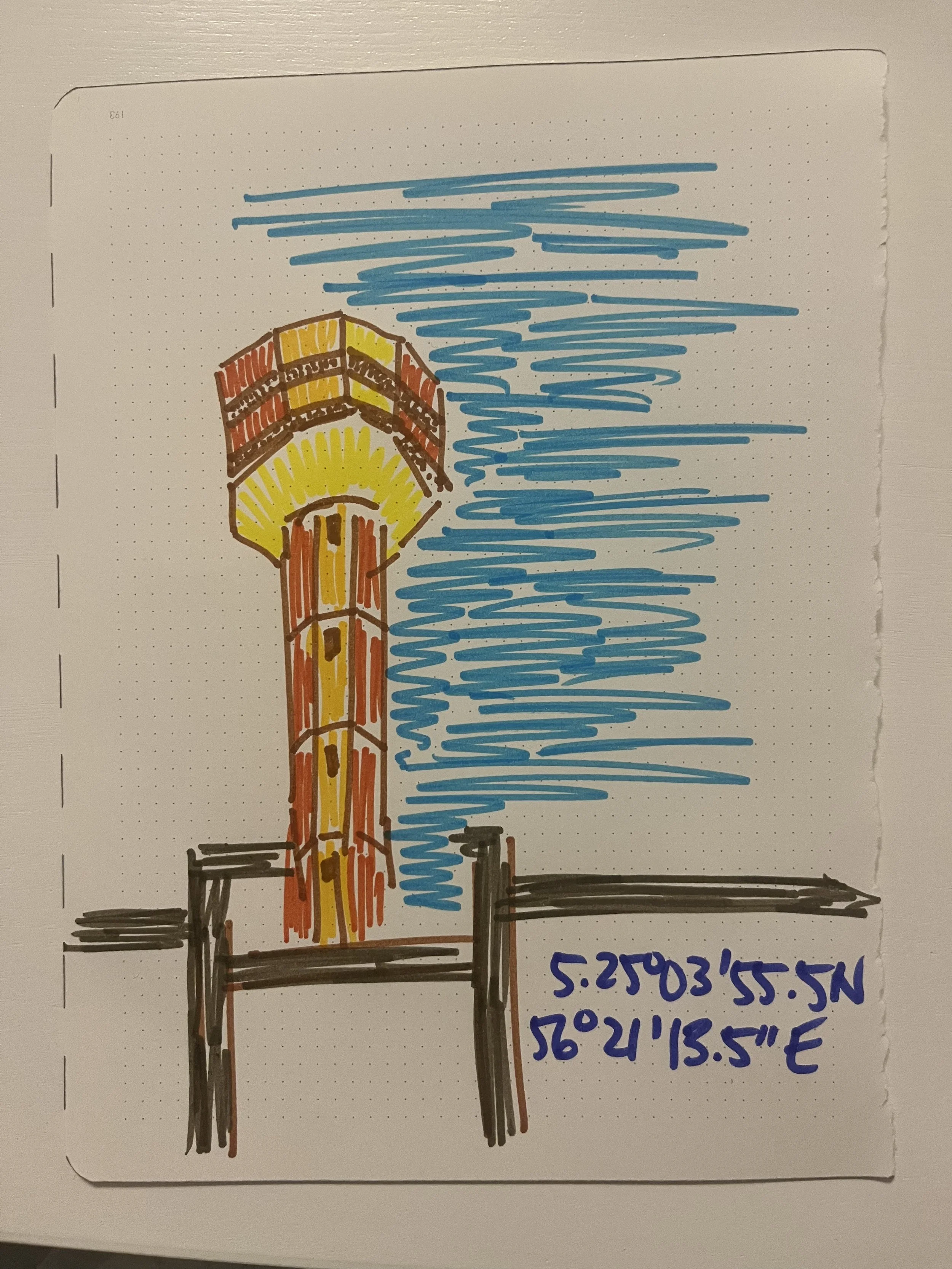
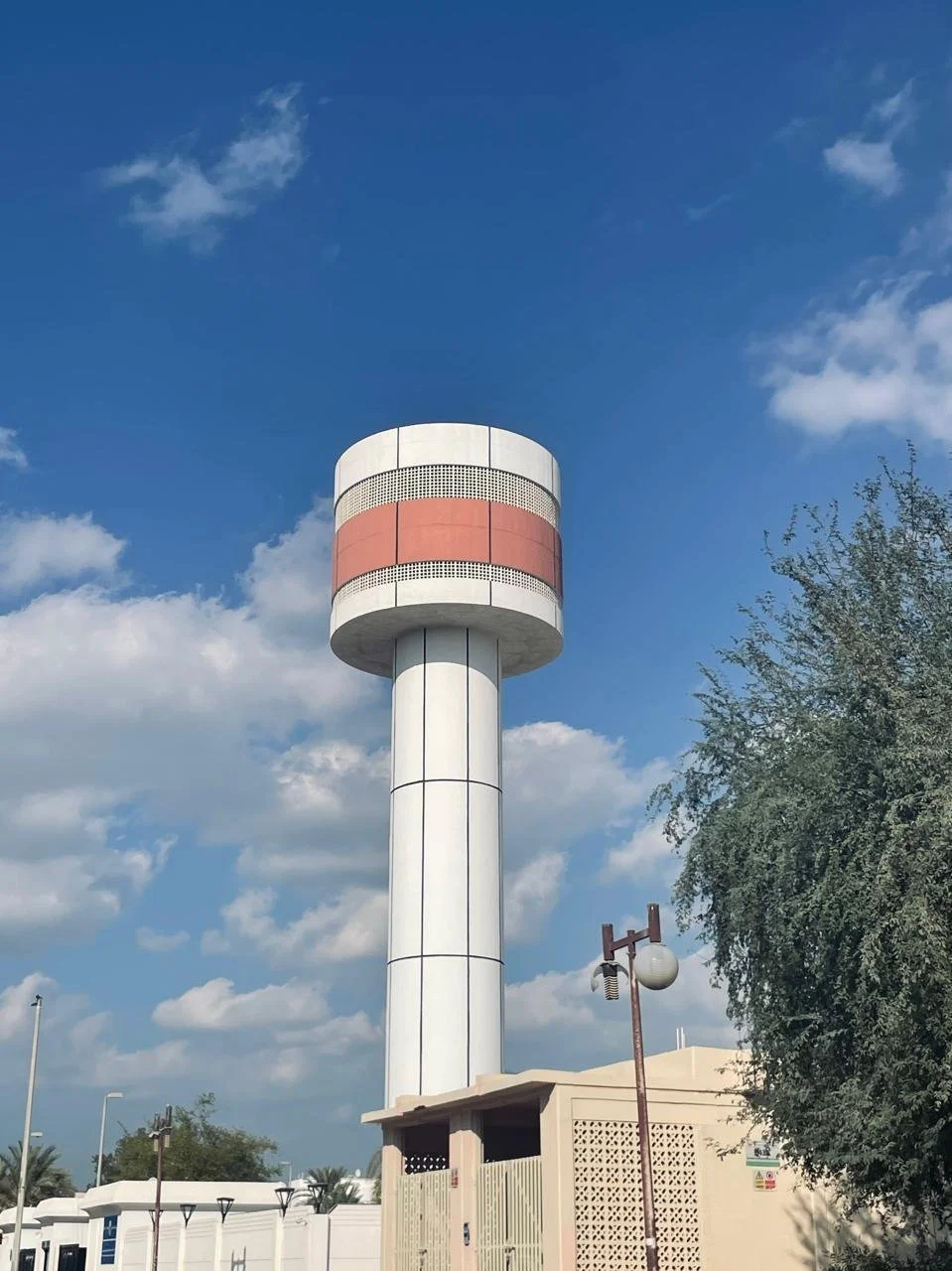
A few finds from our Great Water Tower Hunt.
Different proportions. Different heights. Mushroom-shaped tanks. Geometric vents. Unexpected color choices.
Most infrastructure is designed to disappear into the background. It solves a problem and asks for very little attention in return. Yet many of these towers seem to resist that fate. Despite being built as purely functional objects to solve the same problem, the towers are surprisingly varied and possess striking visual characteristics.
The water tower in Al Khazzan park in Satwa is perhaps one of the clearest examples of this. Designed by architect and planner Dariush Zandi, its form and geometric detailing draw directly from Islamic motifs.
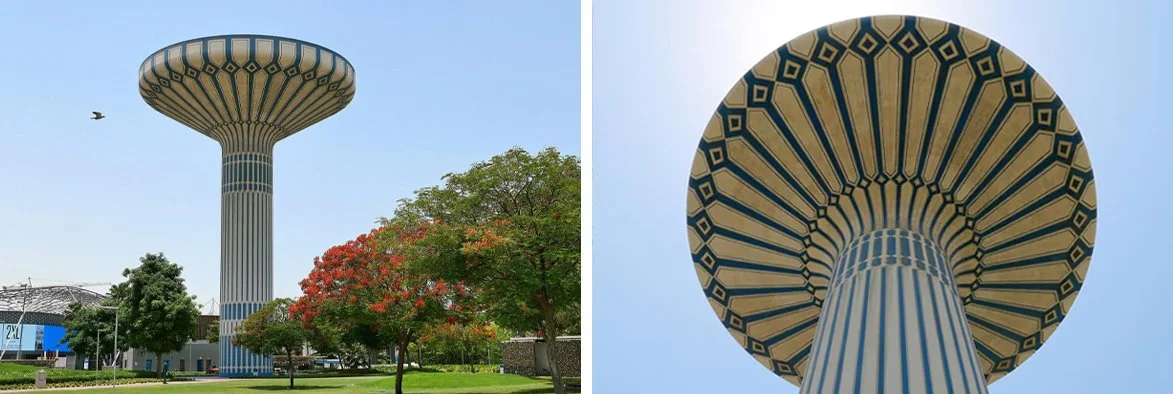
The water tower in Al Khazzan park. // Photo: Pawan Singh, The National.
From Field-findings to Design
Our water tower hunt grew into an archive that the studio is now actively working from. We began to strip the towers back to their essential forms and reconstruct them through new mediums, from collages made from repurposed wood and flower vases crafted in jesmonite to posters developed from technical drawings. With each object we designed, we found new ways to look at the towers and pay close attention to the details that first drew us in.
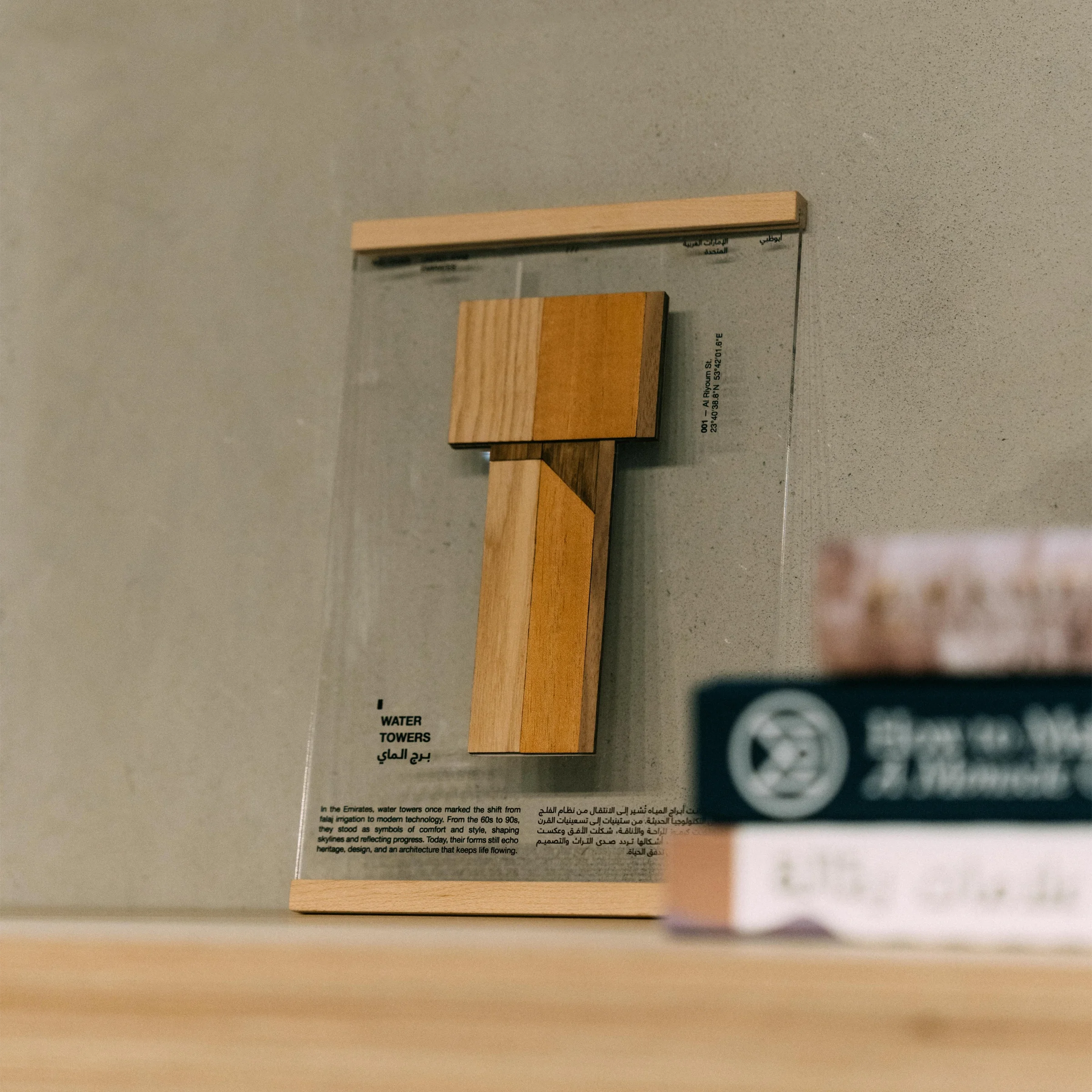
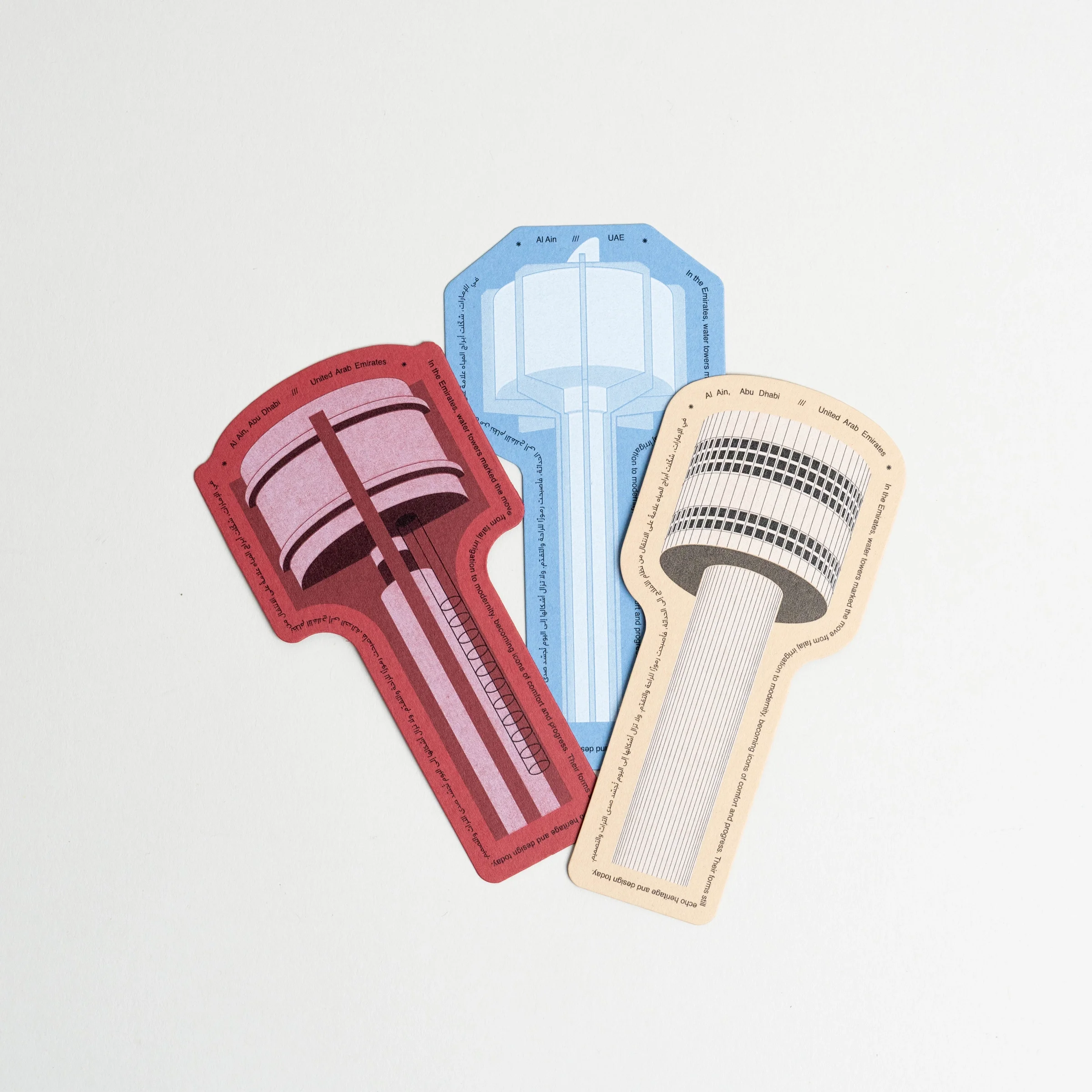
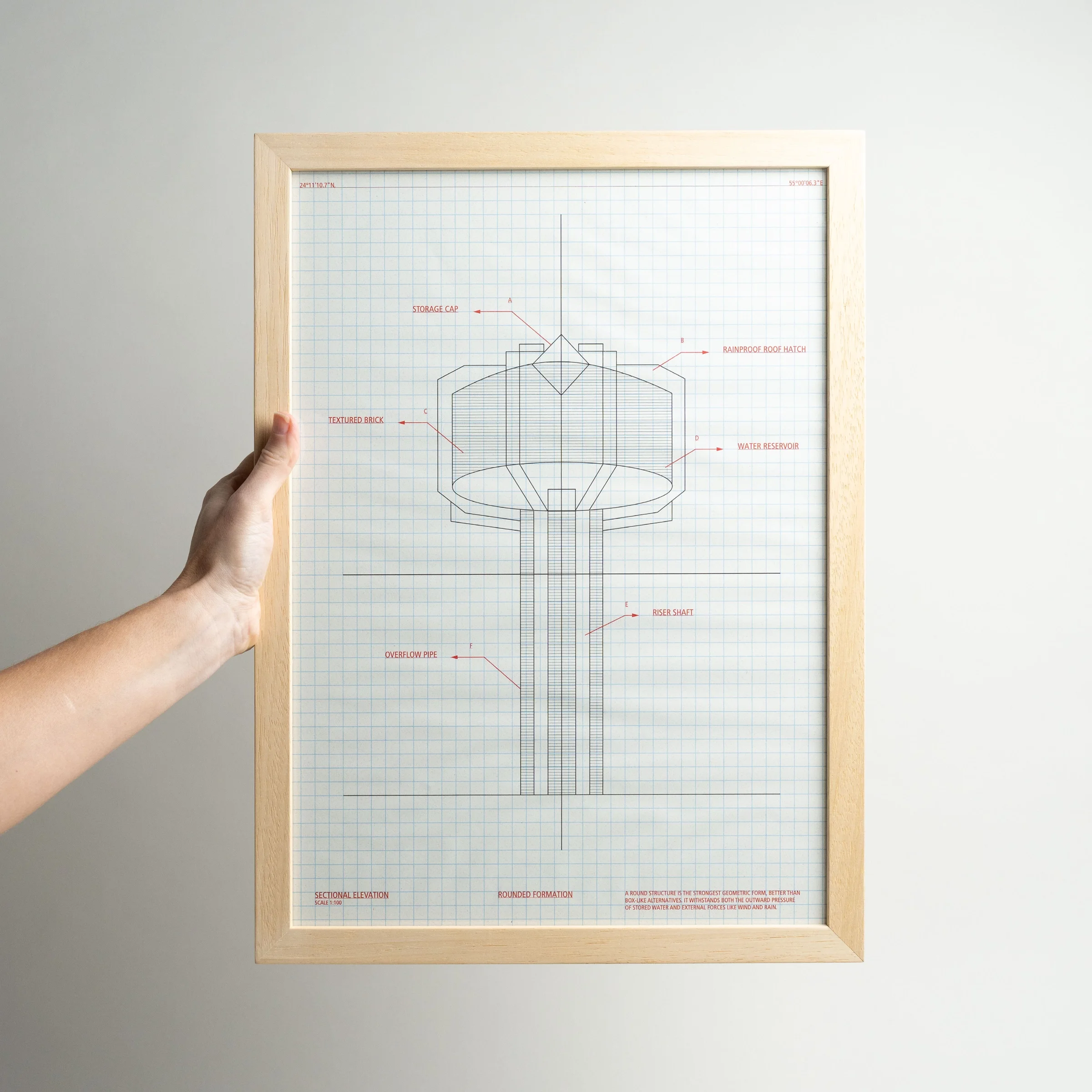
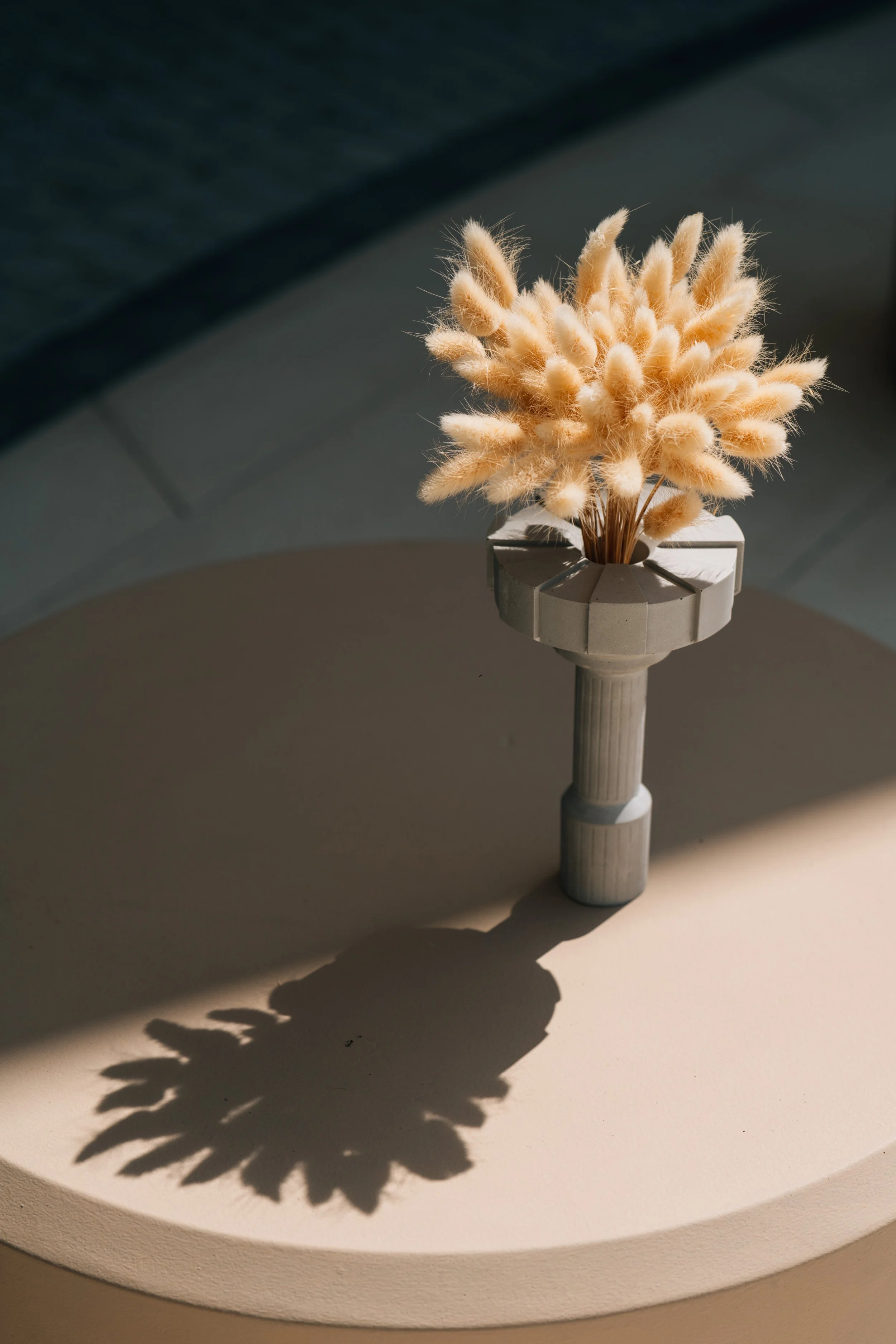
Some of what Fabrica developed from our water tower archive.
What started as a fascination with water towers has become a broader question: What else around us is fading into the background and deserves a second look before they disappear from memory altogether?
Join the Research
We'd love to expand our archive, and knowledge about water towers and we would love to hear from you. (Just pass by, e-mail or DM us)
Do you or your relatives remember these water towers being part of your neighborhood growing up?
Did any of them have nicknames or stories attached to them?
Were there other landmarks that helped you find your way home?
If the engineering problem was largely the same, why do you think the towers look so different?
Are there other pieces of infrastructure, architecture or everyday life in the UAE you think we should be paying attention to?
Where we dived in and where you can too if you want to learn more
Building Sharjah, Sultan Sooud Al Qassemi et al.
Search for Fresh Water in the Trucial States 1950/60s, Dubai As It Used To Be
Dubai's Lost Water Towers, Dubai As It Used To Be
Eric Tulloch - Dubai’s Waterman 1961, Dubai As It Used To Be
The UAE’s retro water towers, in pictures, The National
musabahalmazrouei, Instagram